Showing posts with label 1001. Show all posts

Friday, August 15, 2014

The House of Mirth ~ Edith Wharton

Whilst Jane Austen used her knowledge of drawing room conversions as inspiration for her novels, Edith Wharton has drawn upon her experiences as a member of New York’s Upper Class Society for her novel The House of Mirth.

This book was wonderfully written, with the conversations between each character feeling completely natural.  Wharton shows the fabulously wealthy as being conceited, shallow and condescending, where their only good advice is to make sure that you ‘marry money’, where ‘breaking in new people’ is tiresome and where the most laborious job of the year is going through your furs.

Lily Bart, the novel’s protagonist, is a popular and beautiful member of New York’s Upper Class Society around 1890.  She has no money of her own and her parents are deceased, but her Aunt takes her in and as she is very wealthy she makes sure that Lily has the best clothes to wear for any occasion. Lily’s mother and her Aunt have groomed her to be a beautiful ornament, but whose arm she is to hang off remains to be seen.  At 29 years old she is under pressure to marry, but she cannot make up her mind.  She loves Lawrence Selden but she would be stepping down in the world if she made that match, and he definitely could not afford her extravagances.  Percy Gryce is fabulously wealthy but he’s a mother’s boy and Lily’s smoking and mounting gambling debts scare him off.  Simon Rosedale, a Jewish suitor is distasteful to her, but he begins to be her only option as time goes on.

Whilst she ponders her future, Lily finds herself in more than one compromising situation; although totally innocent on her part they spark malicious gossip about her that will not go away.  When she is accused of trying to steal away the husband of one of her friends, Bertha Dorset, whilst holidaying on the Dorset’s yacht the scandal ruins Lily’s status.  Lilly is innocent of course, but Bertha is trying to deflect possible gossip about her own indiscretions with a poet.

As the rumours circle round Lily’s Aunt is appalled by her apparent behaviour and in the final weeks before her death she disinherits Lily leaving her only a small legacy which will just cover a debt which is hanging over Lily’s head like a black cloud. The payment of the legacy is withheld for almost a year until legal problems with the Will are ironed out, and Lily is forced to find work.  Having been groomed for nothing but ornamentation Lily’s work output is poor, she is let go and her health and state of mind begin to suffer.

No longer needing to aim so high for social standing, Lawrence Selden is once again a possible match, but fate will see to it that they can never be together.

What a tragic figure Lily Bart is, and this novel highlights once again how social conventions of the time make life extremely difficult for young single women.  Thomas Hardy shows us time and again with his novels, and now we see that it cannot be escaped even with the wealthy.

As for the title, it comes from Ecclesiastes 7:4: “The heart of the wise is in the house of mourning; but the heart of fools is in the house of mirth”.

A great read.

Maxine 

Monday, June 24, 2013

Shantaram ~ Gregory David Roberts


Wow, Shantaram is one heck of a read. I've spent so much time with these characters that it will be hard to start a new novel.

There's so much to Shantaram, though how much is based on the author's actual experiences in Bombay is anyone's guess, but what I enjoyed most about this novel was the insight it gave me into the Indian culture such as friendship, love and the meaning of that curious Indian head wiggle. 

The story is told in the first person.  There is plenty of humour at the start of the novel but it does get darker and darker, until you wonder if there is going to be light at the end of the tunnel.  The characters range from slum dwellers to members of the Bombay Mafia, and I had to keep reminding myself that the mafia guys were criminals and violent men, yet it was so hard not to like them because we follow their developing friendships with the narrator Lin.

'Lin' is an Australian who has escaped from prison and who has arrived in Bombay on a fake New Zealand passport.  He is befriended by Prabhakar a young Indian tourist guide, and a truly wonderful character who totally enriches this novel.  Prabhakar takes Lin to his home village for six months as their friendship strengthens and finds Lin a hut in the slum where he lives in Bombay.  This hut eventually becomes the slum clinic thanks to Lin's knowledge of first aid, and the slum dwellers inability to obtain healthcare anywhere else.

Lin is eventually recruited into the Mafia and he finds himself prepared to risk his life just for the love of the mafia boss who he desperately wants to see as a father figure.  The father figure dreams are shattered towards the end of the novel and only the friendships that Lin has made over his years in Bombay will help to pull him through the hard times.

Despite its size, Shantaram is very easy to read, though I did find the constant metaphors and similes annoying and in places quite cringe worthy ("Our lips met like waves that crest and merge the whirl of storming seas."), and at times it did annoy me when 'Lin' gave the occasional sob story about his time spent in prison.  I felt like saying "so what, you committed the crime...." 

With this aside though Shantaram is a cracking read and it will probably rate up there with my favourites.


Maxine

Wednesday, February 13, 2013

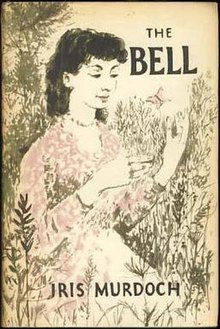
The Bell ~ Iris Murdoch


This is my third Iris Murdoch read.  I thoroughly enjoyed the satirical A Severed Head and the hilarious The Sea, The Sea, so when I picked up The Bell and read the blurb I was expecting a comedy of sorts set in a religious community.  What I got, however, was a totally different kind of read with The Bell being more about dysfunctional people, flawed relationships and torn emotions. 

The novel is set in Gloucestershire at Imber Abbey, where a small lay Anglican community live and work simplyThe story opens with Dora Greenfield, a wayward mischievous woman who is returning to her marriage after an affair.  Dora’s husband Paul, an older man, loves her but no longer respects her and though she is frightened of him and his bullying ways she is more afraid of him when they are apart.  Paul is conducting research at Imber Abbey and when Dora arrives she feels like a fish out of water as whatever she does seems to contradict with what the community is about.

The novel then switches focus to the head of the community, and owner of the Imber Community house, Michael MeadeOriginally a teacher, he once had dreams of becoming a priest but these were destroyed by his affection for a boy called Nick Fawley a student at the school where he taught, and who told all to the head of the school to Michael’s shame.

The boy becomes a troubled man; a raging alcoholic who constantly threatens suicide, and who comes to stay at the lodge located across the lake from the Imber Community house.  Nick’s twin sister Catherine is a revered member of the community as she is preparing to enter the Abby as a nun (though this appears to be against her will) and it is only for this reason that Nick and his dog Murphy are tolerated – at a distance.  A situation that is torturous for Michael.

Another main character in the novel is a student called Toby Gashe who has come for a stay at Imber before going to Oxford. Michael, during a lapse of self control, kisses Toby briefly on the lips.  The story then follows Michael’s mental torment as he questions whether he has damaged Toby in the same way that he believes he has damaged Nick.  Toby is confused and upset at first but he holds no animosity towards Michael as he genuinely likes him, but to prove to himself that he is not ‘that way inclined’ he pursues Dora.

All of this takes place during an important time at Imber – the community is awaiting the delivery of a new bell.  The old bell had a legend associated with it, and the telling of it captivates Dora’s imagination so when Toby informs Dora that whilst diving in the lake he believes he has found a large bell Dora hatches a plan.  She and Toby will raise the old bell from the lake and exchange it for the new bell thereby creating a ‘miracle’ at the unveiling.  This is a major task, but with Toby’s engineering knowledge and the help of a tractor they almost succeed……..

Dora’s character was at first charming and fun, but as the novel reaches its climax you realise that yes, one of the characters was correct when they called her a ‘bitch’.  She is very self centred, using her charms only to her own advantage, and has no regard whatsoever on how the ‘miracle’ may effect those of the community.

My favourite characterisation was that of Michael Meade and the sensitive way that Murdoch dealt with his homosexuality. Consider, this novel was written in 1958 when homosexuals were whispered about, and called ‘pansies’ or ‘queers’.  Murdoch does not write of Michaels feelings towards Nick or Toby as dirty or twisted but just as a different kind of love.  It was beautifully handled.

There is something mystical about the whole novel; it has a certain haunting atmosphere about it, the dysfunctional community members, Michael’s recurring nightmare, and the legend of that ominous bell lurking in the background.  A great read indeed.

Maxine

Tuesday, October 23, 2012

Plot Like Hardy, Write Like Maugham


2012 was to be the year that I dedicated my reading to independent authors, and whilst I tried (I really did), by the end of August I was feeling such a ‘lack of literature’ in my reading diet that I switched back to my ‘1001’ list.

I will keep those E-books that I have received on my reading list and will try to give them a fair go at some point.  The books that I did read made me realise what I enjoy about reading – it’s the plotting, language and characterisations.  With the exception of one or two indie books, these elements just did not figure.

If you could plot like Thomas Hardy, characterise like Stephen King and write like W. Somerset Maugham then you would be on to a winner.

I’m still undecided with regards to independent publishing, because of the two books I did enjoy.  Even a traditionally published author can write a dud, but generally they are well written duds.  It’s the quality of the writing that I am struggling with and this is why I have gone back to my original reading list.

A few years ago I used to be a member of a book club whose reading I felt to be a little too ‘high-brow’ for my humble tastes which didn’t venture much beyond Stephen King and Clive Barker.  But five years on I now feel that this is the level I am currently at.  I need to aim high to get the satisfaction I need – there’s still more Dickens, Dostoesvky, Tolstoy and Hardy novels out there I’ve yet to read and they will be my goals next year.

In the meantime I am really enjoying my current audio book the magnificent Wolf Hall by Hilary Mantel.  I have had to do a little background reading about Thomas Cromwell, Henry VIII, Anne Boleyn and Sir Thomas More, as well as events during the King's reign, to understand the character motivations and the period, but it is so worth it.  My physical read is All Quiet on the Western Front by Erich Maria Remarque.  The emotion evoked in this novel is so brutal that I can’t read it at night for fear it will pray on my mind whilst I am asleep. 

Now that’s what I call writing.

Until next time.

Maxine

Monday, July 23, 2012

The Mayor of Casterbridge - Thomas Hardy


I loved this rags to riches to rags story so much that it will definitely feature in my all time top ten favourite books.

The Mayor of Casterbridge, Michael Henchard, is a proud, stubborn and hot tempered man.  He reacts without proper thought to future consequences, and when he reaps the rewards of his actions he his quick to blame everyone but himself.  It is only towards the end of the novel that he realises he alone brought his fate down upon himself.

Henchard was not always the man that the people of Casterbridge knew him to be.  When he was 21, and in a drunken state, he sold his wife and child by auction at a county fair.  Devastated by his actions he swears off alcohol for the next 21 years and builds a new and productive life.  But, this is a story of secrets, and the biggest secret of all is that which is held by Michael Henchard’s wife, who returns to her husband 18 years after he sold her.

This novel highlights the status of women in society and what is considered to be proper and moral conduct.  A young woman who has had a love affair with Michael Henchard falls into disgrace when she moves to Casterbridge to demand that he marry her and restore her good name.  The lower class in this small community – who seem to have the highest morals of all - conspire to bring her down.

The idea of Henchard’s wife having lived with her ‘purchaser’ out of wedlock for 18 years would probably have scandalised 19th Century readers, and there are other far reaching effects on another character in the novel which I can’t mention without introducing a plot spoiler, and so will remain un-named.

There were no wasted elements here, it is so well plotted - every action has a negative reaction.  – you find yourself running through each cause and effect, tutting along the way and thinking ‘if only he hadn’t done this in chapter so and so, then that wouldn’t have happened in this chapter…..etc’

I read Hardy’s Tess a couple of years ago and found it very sad, although beautifully written.  The Mayor of Casterbridge is told in a more straight forward manner, but he still managed to make me cry at the end!

Maxine 

Thursday, July 12, 2012

50 Shades of Blah!


I'm talking about the hype surrounding the E L James trilogy. I haven't read 50 Shades of Grey but hey, if there is a bandwagon lets jump on it.  I don't need to read this book to know it will be rubbish, those who know me as the bookworm that I am have warned me off it, and the reviews I have read have been enough for me to know that the writing will be poor and the use of language basic. 

I thought the following review was brilliant: 


I am just thankful that I caught my mother in time so that she could cancel her purchase from Amazon after someone recommended it to her. She is 68 years old and a recent widow. What the?

Why am I so anti a novel that I haven't read? Well because the hype surrounding it has reached such a pitch that we are now going to be inundated with frustrated housewives trying to sell their fantasies thinking they can make a million like E L James. Move over vampire novels..... is this the next genre that will be buckling the shelves at our local book stores making it even harder to find something new that's decent to read?  No wonder I escape into the 19th century and delve into the classics, it's just about impossible to find a new book these days, when browsing in a book shop, that truly represents the art of the written word.  Two shelves containing penguin classics doesn’t cut it.

Next will come the movie with the 'Hollywood Treatment', which is just another avenue to rip you off.  If I see another ad, article, recommendation, or breakfast tv segment about this novel I shall cry LOL!  I shall cry for all the media hype that encourages us to spend hard earned money with a guarantee to be left disappointed and wonder what all the fuss was about.  It’s lucky we have short memories – or so the industry would like to think - otherwise why do they continue to pump out such rubbish?

If you need to read a trashy book because your marriage needs saving, or your sex life needs spicing up, then you're better off seeing a marriage counsellor.  But if you want to read a good novel try The Mayor of Casterbridge by Thomas Hardy.  I'm reading it at the moment and it is just wonderful……or for a modern master of letters how about The Wind Through The Keyhole by Stephen King - I couldn't put it down. A story within a story within a story, and what a story it was, and what a story teller. I’ve fallen in love with Stephen King all over again.


Mr King, you probably get this a lot but 'I  say thankee'.

Maxine

Tuesday, July 3, 2012

Nicholas Nickleby ~ Charles Dickens


Yet another great read from Dickens, but I did have a few problems with it.  Although apparently a good example of 19th Century comedy, I didn't really find it very funny.  Mrs Nickleby was to provide the comic relief, and undoubtably back in 1838 this type of humour was appreciated, but I found her awfully annoying.

Nicholas is not immediately likeable; he's not as selfish as Philip 'Pip' Pirrip but he's not the true gentleman that David Copperfield grew up to be.  Nicholas has a good heart; however he is very hot headed and, when it comes to defending someone's honour, he does it with violence and unable to leave it with just one blow he must pummel that person to within an inch of his life!

There are a whole host of characters and towards the end I did get a bit forgetful of who one or two of them were. I guess Wackford Squeers, the beastly conniving school master was one of my favourites and the tragic Smike. 

There are plenty of cartoonish names, and the ever present benevolent gentleman, although in this case there are two (twins!), but you tend to expect this from Dickens.

The novel pretty much follows the Nickleby family after the death of Nicholas's father. The family are left destitute and so they travel to the big smoke to appeal to their wealthy relative Ralph Nickleby for assistance. Ralph is extremely unlikeable and he and Nicholas soon become sworn enemies which is the underlying theme of the whole novel. I loved the revelation of who Ralph Nickleby's son was, and the outcome of that revelation.

A very satisfying read all in all.

Maxine

Tuesday, June 12, 2012

The Iliad ~ Homer


I cannot describe the sense of achievement that I feel at having completed The Iliad today after several studious months.

The title The Iliad actually means ‘What Happened at Ilion’, Ilion being the capital of Troy.  The Greeks and the Trojans have been battling it out for the past ten years, and The Iliad is set in the final year.

There are plenty of boring references to who is fighting, who is killed and who they are the son of and various family histories, but the story itself is quite amazing.  I loved the references to the gods, and how they interfere. I enjoyed Nestor who is a legend in his own lunch box, and the overall tale of the doomed Achilles and how his pride results in the death of his friend Patroclus.  

I could not have read this and enjoyed it as much as I did if it hadn't been for the Shmoop Study Guide.  It takes you point by point, book by book (there are 24 books to The Iliad) so that you have a full understanding of the meaning being portrayed in the poem, but it does so in a light hearted manner which makes it a great fun read on it’s own.

I read the translation by George Chapman, and whilst it was hard going once I found the rhythm of the poem and got to know the characters and the gods I found it hugely enjoyable.

Next year I’m going to tackle The Odyssey.

Maxine

Thursday, June 7, 2012

Great Expectations ~ Charles Dickens

I felt the need to do another Dickens, which is how it should be considering it is Dickens’ 200th Birthday year.


Great Expectations is more of a plot driven novel compared to some of his other work, and not as long as David Copperfield or Bleak House.

I did the audio book (narrated by Simon Vance) and although I enjoyed it very much I found that I kept drawing comparisons to David Copperfield and I found that I didn’t like Pip half as much as David.  Pip is a blacksmith’s boy who is told he is to come into Great Expectations.  He immediately believes it to be from the dotty but wealthy Miss Haversham whom he visits.

As soon as Pip receives his good news he basically doesn’t take a second glance back at his home, his village or his friends.  I did not like that in his character at all, expecially when it means forgetting the lovely Joe Gargery his brother-in-law and father figure.  When Pip finally receives the news of his benefactor, it comes as a bit of a shock, and worse still it looks like he’s not going to come into his money after all, it is then that he finds out who his real friends are.

It’s a moral tale, and for a quick Dickens read it’s a good one.  But, for my money give me David Copperfield every time.

Maxine

Saturday, December 17, 2011

2011 That Was the Year That Was

Well, we have another year just about done and dusted, and I'm sure a lot of people are with me in saying that this is a year we'd be happy to say goodbye to.  As I was packing my suitcase today in preparation for my Christmas holidays I was thinking about some of the books that I have read this year.  I can't count 2011 as my best year of reading as I didn't make my challenge of 75 novels, but if you consider that my list included Melmoth The Wanderer, Anna Karenina (nearly finished), several Charles Dickens novels and The Iliad (halfway through it), I'm pretty happy with my effort overall!


2011 was the year that I discovered Haruki Murakami, firstly with the strange Wind Up Bird Chronicle and then the beautiful Kafka on the Shore.  Dance, Dance, Dance was a little disappointing but I'm waiting in anticipation to next year when I'll be reading IQ84.  It's kind of funny but when I first joined a Book Club the genre I disliked the most was Magic Realism yet I find that the more I read, the more I enjoy it.  Murakami's novels are certainly unusual, but there's something about the characters that intrigue you; especially characters like Mr Nakata in Kafka on the Shore.  

2011 was the year that Earth Abides by George R Stewart was recommended to me by a fellow blogger after they read my review of Children of Men.  Isherwood Williams is a wonderful character, his love of the written word and his care of one of the last remaining libraries in his post apocalyptic world is very poignant in relation to today's e-book revolution.  The final chapter contains imagery that I don't think I will ever forget.  It's quite a novel, and probably one of the best in the genre.

2011 was the year that I became disillusioned with Michael Crawford after reading his autobiography Parcel Arrived Safely - Tied with String.  It taught me a lesson - if you admire someone then don't read about them!  He's way too full of himself and the fact that he had cheated on his wife totally finished me - I can't even watch him on TV now.  The realm of the autobiography is a dodgy one, in a way the author is re-inventing his own past for entertainment and that's not always such a good thing. There's something to be said for a little mystery when it comes to celebrities.

The highlight of 2011, for me, was meeting one of the best literary characters ever and his name was Owen Meany.  This diminutive little guy with the weasley face, big ears and high pitched voice was an unlikely hero.  But, hero he became and I just loved his outlook on life - he could not be put down, he had something to say and he said it loud and proud.  A Prayer for Owen Meany by John Irving is both funny, sad and a wonderfully put together novel. The ending is so unexpected, but the storyline had been building to just this the whole way through.  It's fantastic story telling and I totally recommend it.

So now I'm debating do I take a real book on my holiday or do I take my Kindle? I generally don't read much when I am away but I did recently pick up Cold Hand in Mine by the master of eerie stories Robert Aickman so that may make it's way into my hand luggage.

In 2012 I hope to be dabbling into a lot of Indie Horror, and have five more spots left on my list if anyone would like me to read and review their novel.  Details can be found here:

http://caffeineandchapters.blogspot.com/2011/11/are-you-on-my-2012-reading-list.html

I'll be off the air for around three weeks, so have a safe and happy Christmas everyone and I hope you find your next favourite novel in your Christmas stockings :)

All the best

Maxine

Tuesday, October 4, 2011

I Wish I Could Write Like Tolstoy

Tolstoy

Stories are really only a string of words, most of which we all know, that are put together to describe and explain.  But, it is the way that you string them together that makes the difference between an okay writer and an incredible one.

W. Somerset Maugham has always rated very highly with me for the way that he is so comfortable to settle down with.  He draws you into the story, like you are a familiar friend; and he makes it look so easy.  Yet another writer strings his words together and it’s just a bunch of characters and a setting which feels like ‘just a story’.  There’s nothing familiar about it or believable.  You are not ‘drawn in’.

Now, after reading many chapters of Anna Karenina by Tolstoy, he’s rating way up there with Maugham in the way that he is making me feel.  The settings and dialogue are so natural, it all flows magnificently.  He isn’t overly descriptive yet I can picture the scenes and the characters effortlessly.  So much so that I’m going to ditch the audio version (which by the way is excellent) because I want to curl up with the ‘real deal’ and immerse myself within actual pages.  That is the joy of reading, and I haven’t felt like this for some time.

I used to love curling up with Stephen King many moons ago, okay so it’s horror which is not believable in the least, but it was King’s characterisations that I used to love so much.  However, I have been reading his ‘kindle single’ Mile 81 and I’m getting the feeling that he’s committed a ‘Meat Loaf at the AFL’ offence by not calling it quits.  It’s quite badly written, and appears to be a re-hash of old themes, though I haven’t finished it yet so I could be wrong (but I don’t think I am).  I’ve pre-committed to his new novel 11.22.63 (a date which is horribly close to my ex-husband’s birthday of 11.22.61!) on Amazon but feel it’s just going to be an addition to my King collection rather than a ‘must read’ once I get it.

On my other reading front I’ve nearly finished the audio version of Mill on the Floss, narrated by Nadia May, and I have really enjoyed spending time with Maggie Tulliver, although it hasn’t been an uplifting novel.  But, it’s another classic to put under my belt as I slowly plough through them.

Scare me Please!
I’m still looking for that ultimate horror.  I have been asking for recommendations but nothing seems to be forthcoming from you guys out there.  Please let me know what book or even short story has frightened you by way of a comment.  I’ve just ordered some Robert Aickman collections – one of them is Cold Hand in Mine which I’m really looking forward to reading and I’ve just enjoyed Pollock and the Porroh Man by H G Wells which was a nice and creepy short story and would have really scared readers back in Victorian England I’m sure.

So, I’m about to curl up with Tolstoy now, with my nightly latte, and marvel at how he can string together these words so wonderfully, and I can’t!

Happy reading and don’t forget those recommendations.

Maxine

Wednesday, September 28, 2011

The Novel vs The Movie

Ater recently reading Ben-Hur for the ‘Book That Inspired the Oscar Winning Movie” theme for my book club, and finding time to sit down and watch the first half of the ‘oscar winning’ movie, I’m feeling rather annoyed.  Apart from the usual changes in characters, and general mucking around with the storyline and plot, I find it hard to believe that a studio would cast the gorgeous Ben-Hur of the novel with an actor who had a receding hairline and a forced smile.  I know I’m 52 years too late to protest this obvious miscasting but there it is.  Weren’t there any good looking Hollywood actors available in 1959 or maybe Charlton Heston is just not my ‘type’?

So, I’ve been thinking about other movie faux pas when it comes to casting against the novels character type.  Gwyneth Paltrow playing Marge Sherwood in The Talented Mr Ripley is one that springs to mind.  Marge, in the novel by Patricia Highsmith, is a robust girl with a healthy appetite who is not altogether very attractive.  It is for this reason that Tom Ripley dislikes her, she actually disgusts him.  He is repelled by the fact that Dicky is attracted to her.  This is important.  Now, who can be repelled by Gwyneth Paltrow?  I ask you……!

One of the very worst casting faux pas was Mickey Rooney as Mr Yunioshi in that truly awful adaptation of Capote’s not (in my opinion) particularly good novella Breakfast at Tiffany’s.  It must be the most embarrassing movie role to watch and I can’t even comment on it without cringing.

Another blunder movie makers make is cutting out a character altogether.  Who makes this decision?  Have they ever read the book?  East of Eden is a beloved novel of mine, and for me the main character was the Chinese servant Lee.  He was an integral part of the story, but was nowhere to be seen in the movie.  Instead we had to put up with a mediocre screen-play and James Dean hanging off window sills and tree branches.  What the?

And, while we’re at it why mess with the storyline?  If it was such a great novel that it just had to be made into a movie then why change it?  In some cases the novel should stay a novel, no movie required.  Case in point is Golden’s Memoirs of a Geisha. It did not translate into a movie very well at all.  Where were the images of the beautiful kimono designs that were described so beautifully and lovingly in the novel?  And more to the point why the hell does Nobu have both arms?  He only has one in the novel, and for this reason his back story and looks are important to his character and those who know him. 

But, I have to concede that some movies just can’t go wrong with the novel’s material and, for me these would be To Kill a Mockingbird,  Lord of the Rings (even though characters were cut and blended, and lines meddled with, it is a very exciting adaptation of Frodo’s quest).  Lastly, I can’t go past the Australian mini-series production of Tim Winton’s Cloudstreet.  I never would have thought that the ambience and characters of this novel could be captured so perfectly on screen.

I guess, in the end if you really love a novel then avoid the movie as nine times out of ten you will be very disappointed.

Well, that’s my gripe for the day J

Happy reading!

Maxine

Saturday, August 13, 2011

"Of All My Books I Like This The Best"

So wrote Charles Dickens of David Copperfield.

Actually, after finishing this novel, I’m close to thinking that instead of ploughing through 1001 Books You Must Read Before you Die perhaps I should just read everything Charles Dickens has ever written, because he is well and truly a master story teller and so far (apart from Bleak House) I have thoroughly enjoyed what I have read.

When I started David Copperfield I was worried that I would be reading a story about a little destitute boy who battles through trials and tribulations to become a gentleman, and I was very anxious as to what those trials would be because he is such a nice little boy.  Well, it wasn’t like that.  Sure he has a rough ‘trot’ (pardon the pun, you won’t appreciate that one if you’ve not read David Copperfield!) but that does not constitute the whole book and that is what makes it so enjoyable.  When David goes to a questionable school I was imagining all types of beatings and bullying but in fact he meets a school master who does his best under very trying conditions, and he makes friends with two boys (Traddles and Steerforth) who will play very different roles in his life when he is older. 

Mr Murdstone (David’s step-father) and Miss Murdstone the 'steely' sister are very dark moody characters that cast such a gloom over the once happy family that just about breaks your heart.  You can really feel David’s nerves when he tries to do his lessons under the dark glare of his step-father and it’s no wonder he stumbles and forgets.  David’s mother is not allowed to show him any affection and after an altercation with Mr Murdstone he is sent away to school; then, when she dies, he is pulled out of school and sent to work, he was only a small child!

One thing I could not understand as David got older was what this intelligent young man saw in Dora Spendlow, the daughter of his employer, until I read somewhere that she was based on Dickens’ own mother.  He calls her his ‘child-wife’ and that really is what she is.  She’s very pretty but has no concept of house-keeping or doing figures and just likes to play with her dog Jip and can’t bear to be grumbled at or found fault with.  Once David accepts her for what she is and stops trying to change her he finds himself more settled in his marriage although the marriage is short lived.  David’s excuse for his choice in a wife is his 'young undisciplined heart', even Dora towards the end of her illness agreed that they should have enjoyed their love just as a boy and a girl and then just left it there.

Apart from David’s eccentric but loving Aunt Betsey Trotwood (who reminded me of Madame Yepanchin in Dostoevsky’s The Idiot), the other strong female in the book is Agnes, she’s very placid and wise, but even she has difficulty dealing with the devious villian of the novel Uriah Heep who slithers his way into the family business and eventually the family home.  Dickens describes him as a thin pale man, with ginger hair and no eyebrows to speak of who is snake-like in his movements and demeanour.  I expected him to have a negative influence over David’s life; however this is not the case.  He casts his poison over Agnes and her father instead and his true nature is exposed by Mr Micawber, whom Heep employs, believing him to be as corrupt as himself.

Now Mr Micawber is a strange character, and I was married to someone like him once.  He never pays his debts and is always waiting for an opportunity to ‘turn up’.  I didn’t like this character particularly (not because it brought back bad memories!) but because of his long convoluted speeches and letters - they annoyed me immensely.  However, he does seem to be a popular Dickens character giving rise to some well known quotations, and after all he is the one who exposes the devious Heep for what he really is, because despite the trail of debt Micawber is actually an honest man.


The strange thing about the novel is that David is barely ever called by his correct name, being called by many nicknames (Daisy), pet names (Doady) and also taking on his Aunts surname of Trotwood, it is like by writing his 'autobiography' David is setting the record straight that this boy, young man and eventually father, was actually called David Copperfield.

David Copperfield is quite an easy read in comparison to Bleak House, being a linear narrative, and there is a lot that you can identify with as we all grow up and fall in love.  If you have never read Dickens don’t let the size of the novels or the convoluted language put you off.  He doesn’t take long to draw you in, and takes you on a wonderful journey with his characters that leaves you sad to say goodbye once you have finished.  

Friday, April 15, 2011

Why do All Good Things Come to an End?

Have you ever read a book and didn't want it to end?  Well, I'm in that situation now; I've nearly finished A Prayer for Owen Meany but I don't want to finish it, I  just want to stay with these characters.

Owen is a great creation, his sarcastic and harsh observations are so full of truth that they really make you think. John Wheelwright, Owen's best friend and our narrator, has related a fantastic story of friendship, injustice and love, all bound up in a scathing commentary on The Vietnam War and (in our narrator's present) the Reagan Administration.  

It really is a pleasure to read something of this caliber especially after just finishing the brilliant Kafka on the Shore.  It is going to be hard to surpass these two novels in my next planned batch of reading.  This also compounds another problem that I have, the book that I am reading in tandem Spiral by Koji Suzuki reads like a piece of junk in comparison to Owen Meany and is very hard to enjoy.  I'm about half way through it and so far not much has happened at all.  I'm waiting for the horror and it's more about code breaking.  If I wanted to read about that I would have picked up Cryptonomicon again.

I've just started reading The Last Block on Harlem by Christopher Herz on my Kindle.  It appears this is a bit of a cult novel gaining recognition due to the hard work put in by Herz in trying to promote and sell it on the streets (and on Twitter which is how I came to know about it).  I've only read a few pages and it is a bit nerve racking trying something by someone very new after reading some really good classics and must reads lately.  I'm not too sure about a couple of character names at the moment, they need to grow on me, but I do like the writing style and I will write more about this novel in my post next week.

So! Here's to more reading, and have a great weekend every one.

PS:  I must mention too, the arrival of my new grandson Taj, who was born on Sunday.  His arrival didn't quite go to plan, but all's well that ends well and I can't wait until May when I go to Western Australia to cuddle him (and his mum, and his proud little brother Jayden) J
                                       

Friday, April 1, 2011

The Plot Thickens!

I really wanted to write a regular blog as I read Kafka on the Shore but work and planning my Christmas holiday has intervened and now I’ve nearly finished it without writing much at all J

This has been a wonderful read, and I can thoroughly recommend it.  There is not one character in the novel that I don’t like, and the two parallel stories are, whilst riveting, totally different from one another.

I love Mr Nagata’s storyline, he is just wonderful, and his quest is so mysterious that even he doesn’t really know what it is until he’s in the right spot or the right thing happens.  Along the way he becomes friends with Hishino, a young truck driver, and due to Nagata’s rememblance to Hoshino’s grandfather he decides to help him. There is a lot of subtle humour between these two characters which really brings a smile to your face.  Hoshino is a really nice laid back young man, and Mr Nagata has had quite a profound life changing effect on him.

Kafka’s storyline is different; he’s not so much on a quest as running from a prophecy (or curse).  Kafka’s father said that Kafka would murder him, and ‘be’ with his mother and sister, this is the same as the Oedipus curse in the Greek legend.  Kafka did not want to fulfill this prophecy and ran away from home, but it seems to be playing out against his will anyway.  This part of the storyline is beautifully written, it’s mystical and poetic and I love the way the narration occasionally shifts perspective. 

So, now the unthinkable has happened to Mr Nagata, which came as quite a shock to me, and Kafka may be leaving our reality.  Things are moving at quite a pace and I can’t wait to see where the storylines will converge.

Staying with the Japanese theme, I will be pick up Spiral by Koji Suzuki from the library tomorrow.  Suzuki has been described as the Japanese ‘Stephen King’ and wrote the successful Ring series so I’m really looking forward to giving him a go.

I've also download what I hope will be very a very interesting audio book by John Irving call A Prayer for Owen Meany which was written as a tribute to The Tin Drum  by Gunter Grass (which I read last year).  It's a biggie so may take a couple of weeks for me to listen to it but it's on the 1001 list and it sounds pretty interesting.

Happy reading everyone!

Saturday, March 26, 2011

Early Thoughts on Kafka on the Shore

When I first joined a book club I found that the genre I least enjoyed was Magic Realism.  Some novels seemed to read as normal life but would then go on a magical tangent.  The Known World by E P Jones and 100 Years of Solitude by Gabriel Garcia Marquez spring to mind, along with that horrid stream of consciousness in Beloved by Toni Morrison.  I couldn’t enjoy these novels as I felt that the genre lended a ‘silliness’ to them.

Then, I borrowed The Life of Pi by Yann Martel and I thoroughly enjoyed it.  The explanation of the events at the end of the novel made the story acceptable to me!

Now, as I become more wider read, I’ve realized that the books I have enjoyed most recently due to their ‘bizareness’ are in fact Magic Realism J  (ie Murakami’s The Wind-Up Bird Chronicle).  So, what am I leading to?  Well, I’ve started another in this genre also by Haruki Murakami called Kafka on the Shore, it’s got me hooked from the opening line, and I felt the need to write about what I have read so far.

I haven’t read any other works by Murakami apart from Wind-Up Bird, so I’m not sure if the cat theme is running through those too.  He must be a cat lover (although with his Johnny Walker character I  might need to question that remark).  In Wind-Up Bird, the protagonists wife hires someone to look for their missing cat,  In Kafka on the Shore one of the main characters Mr Nagata spends his life searching for lost cats.  I love this character, he’s slow witted due to a bizarre event in his childhood (which forms a parallel story in this novel) and talks in a slow and deliberate manner (like our PM Julia Gillard!!).  As a youngster, during WWII, Nagata was picking mushrooms in a wood with his classmates.  Mysteriously they all fell unconscious, though  slowly one by one each of the children came around – except for Nagata.  When he finally awoke in a military hospital, his mind had been wiped clean.  Now an old man he supplements his ‘government subsidy’ with the money he earns in locating cats. Nagata is largely successful in this job due to the fact that he can actually converse with the feline species.  In the search for Goma, the much loved pet of the Koizumi family, he is warned of a dangerous man who dresses like the icon Johnny Walker and has been taking strays from a nearby vacant plot.  This man is a collector of cat’s souls, and it is apparent that he has taken Goma.

The other parallel storyline is that of Kafka, the name taken by a 15 year old boy who has run away from home.  The inner voice that gives him encouragement is known as ‘The Boy Named Crow’, though he may not be an inner voice at all but a separate entity and I wonder if he may be the part of Nagata that went missing as one of the cats remarked how thin Nagata’s shadow was compared to other humans.  It’s obvious the two stories will converge at one point and I wonder if this is the link.

Kafka passes himself off as a 17 year old and spends his time in a library or at the gym as he  doesn’t want to look like a runaway roaming the streets.  Kafka’s mother and older sister left the family home when he was very young and he barely has any memory of them and so he wishes in the women that he meets that they were really his mother or sister.

Some time after travelling and managing to get by with his new identity, Kaftka wakes up after a period of unconsciousness, away from his hotel room, and covered in blood…..

It’s very intriguing so far, and the incident on Rice Bowl Hill in the ‘40’s becomes even more so when a letter from the children’s teacher is written to the professor who studied the event.  She claims that she withheld some information for all those years which probably had a major effect on the result of the study, and the information involves an incident with the young Nagata.

Poor Mr Nagata!  He has lead such a difficult life, having to learn everything all over again but never regaining his former intellect. Kafka has had a well to do life, is very intelligent, but is ultimately a loner who dearly feels the loss of his sister and mother from his life.

I shall sign off now and read some more J

Friday, March 18, 2011

Jane Austen Rules!

 I starting listening to Austen’s Northanger Abbey on my iPod, but for some reason entire parts of it cannot be accessed, so now I’m relegated to reading it on my Kindle.  I love Austen's dialogue, it is so natural you know exactly who is speaking as the banter flows so perfectly. 

I can see Catherine Morland as a kindred spirit, her love of the gothic novel suits  me right down to the ground.  The novel of the day is Ann Radcliffe's Mysteries of Uldopho (which I really must put on my to-read list.  I once tried an appalling Libravox recording of it but gave up).

The characterisation of Isabella Thorpe is brilliant.  Just via her dialogue we can ascertain what a wishy washy selfish and indulged girl she is.  She makes out that she is concerned only with Catherine's wellbeing and has all the time in the world for her when in fact she only cares about herself.  She is very expertly realised by Austen and I'm sure we all know of, or work with, someone just like her!  Even Isabella's brother John Thorpe is a very selfish character who comes across initially as a lot of fun, but is ultimately too contradictory, loud and with only a limited amount of topics to discourse, becomes very quickly boring.  Once Catherine has spent more time with these new friends of her elder brother James' in Bath, she begins to see their failings and is very disappointed in them.

Romance looms on the horizon early on in the novel in the form of the amiable Henry Tilney, and his young sister Eleanor appears to be a more genuine friend for Catherine, although this friendship has a very rocky beginning due to the selfish interference from the Thorpe's.

As you can see, I am enthralled so far and reveling in Austen's writing.

I've also gone back to my love of horror and started listening to Robert Bloch's Psycho.  It is interesting to note that the character of Marion Crane from the movie is actually Mary Crane in the novel and that the self loathing Norman Bates is fat and wears glasses! Though he is still very creepy.  

I am however, very disappointed with the 'shower scene'.  Basically Mary was in the shower, noticed a shadow outside of the shower curtain, saw the butcher's knife which......"was the knife that, a moment later, cut off her scream. And her head."  Not a great deal of drama and horror there really - oh well!

Sunday, March 13, 2011

Disgrace, A Second Chance

Do you ever read a novel by a new author, find you don't like it and then don't bother with any more of his or her work?  I generally do.  It's not the same as reading a tried and true author and finding they've written a bomb.  You generally forgive  the disappointment knowing they are capable of better work.  When I was with my first book club we read Slow Man by J M Coetzee, it was a slow novel and I didn't see the point in it.  Coetzee has several novels on the 1001 list but so far I've bypassed them in favour of something else, Slow Man being too recent a disappointment for me.

However, I bought some books in a book sale last week and one of them was Disgrace by J M Coetzee.  I liked the cover and on reading that the edition was printed to celebrate the centenary of Harvill Secker and is only one of 250, 000 copies, and because this title is on the 1001 list, I thought I would give him a second chance - and I am so pleased I did - I can't put it down.  It's not long, only about 215 pages, but it's so concisely written and touches on so much emotion in so few words, it's brilliant.  Set in South Africa, the premise is about an aging University Professor who's a bit of a Casanova with the some of the young students.  He takes things too far and a student complains which leads to his resignation - a choice he takes rather than apologising for what he feels are his animal desires and which he doesn't want to keep in check. To avoid living amongst the scandal he decides to visit his daughter who lives on a small farm with boarding kennels.  They seems to connect quite well and he helps with the selling of the farm produce and looking after the dogs until one day they are savagely beaten and robbed by two black men and a boy....... His daughter had sold some of her land to a black man called Petrus who has also helped on her farm, but he is no-where to be found on the day of the attack, and  the professor thinks this is far too convenient.  Anger begins to well in him for what has been done to his daughter. This  novel is stark and brutal, but amazingly written.

I wonder if I should give William S Burroughs a scond chance??? Nah, I think I'll pass on that one!!

I finished Something Wicked This Way Comes and it was followed by a brilliant short story called A Sound of Thunder.  It's a sort of 'butterfly effect' warning about a time travel company that can take you back in time to hunt dinosaurs.  The only proviso is that you stay on the designated path and only shoot the marked dinosaurs as they would have died within the hunting time-frame anyway so that the delicate balance of cause and effect will not be disturbed.  Eckels, one of the hunters, however ignores the warning and on returning to the time capsule he steps off the path and crushes a butterfly........ it was really good.  I remember seeing some sort of movie with really bad special effects that was based on this. 

Now I'm listening to 20, 000 Leagues Under The Sea by Jules Verne and I'm sad to say I'm not enjoying it as much as Around the World in 80 Days or Journey to the Centre of the Earth.  So far, it doesn't have the fun factor that the other two have.  It's being narrated by Harlan Ellison who wrote Demon with a Glass Hand (which was the inspiration for Terminator) but he sounds like Bosley from Charlie's Angels which is putting me off a little bit!

Anyhooo, I'm in the mood for horror lately so I've just downloaded Robert Bloch's Psycho, and will try to get that listened to (along with Austen's Northanger Abbey) before bookclub next week!

Friday, February 18, 2011

Middlemarch and Melmoth

The sun has set on Middlemarch, and I will miss the time that I have spent with these wonderful characters. 

It came to a scandalous but fairly happy end.  Dorothea and Will finally avowed their love for each other and Dorothea renounced her wealth to be with the man she truly loved.  Dr Lydegate married Rosamond but it wasn’t the happy marriage he had hoped for as she had been an indulged child, was used to a certain standard of living and getting her own way.  Mary Garth married Fred Vincy and it seems out of all the characters in Middlemarch their marriage was the best suited and destined to work, being childhood sweethearts.

Mr Bulstrode had a secret to keep, but it spilled out in the form of Mr Raffles.  Its outcome had an adverse affect on Will Ladislaw and the Doctor but Dorothea stepped in and prevented a bigger scandal.   Really, Dorothea is the one who comes out looking pretty much like a saint although her halo did slip by marrying her mixed-blood artist of dubious heritage J

I found the biggest message in this novel was how important it is for someone to have something to do and a goal to reach especially for the betterment of people other than yourself; I don’t think that Eliot had much respect for the idle rich. 

Melmoth The Wanderer is a novel that I now wish I hadn’t started reading.  I’m in a quandary about how I feel about it – I’m enjoying it but I’m not.  I’m still on the Spaniard’s story and I guess really it’s about the Spanish Inquisitors and how hard it was at that time in Spain – especially being a monk who wants to renounce his vows.  Now he is in a tunnel under the garden of the convent with a man who murdered his own father, a fellow monk and a novice.  The Spaniard is hoping to be reunited with his brother on the ‘outside’ but he is unsure whether he should trust the man who has been sent to help him.  This is a story that he is relating to the descendant of the Melmoth who supposedly sold his soul to the devil.  It’s taken up about 30% of the book, and obviously has much religious meaning to it but that meaning is going right over my head!  I can only manage half an hour night with this one, it’s pretty intense.

I’ve started Panic by Katherine Howell, and compared to the two books above and my other current read The Wind-Up Bird Chronicle it’s a very light read indeed even if it is about a paramedic whose policeman husband is shot and her infant son abducted.  After reading Violent Exposure I didn’t think I could read another book in this genre - I think there is enough violence in this world without reading about it (yes I love reading horror but that’s a different kettle of fish).  But, I thought well it’s a week until our book club talk so I could fit it in, and I’m actually finding it hard to put down!