Tuesday, July 16, 2013

The Best of The Best of The Best, Sir!


I always laugh at Will Smith’s delivery of this line in Men In Black, but of course to have the drive to be the best of the best is not something to laugh at but something to strive for, so just lately I've been searching for the books that are considered to be the best in their genre, or literary style.

What is considered to be the best is of course subjective depending on what it is we are each looking for in what we read.  I look for use of language; characters that I will never forget (such as Owen Meany) as well as a damn good yarn that will make me think or, in the case of horror, will unsettle me.

Best Short Story

The Dead by James Joyce is widely considered to be the best short story written in the English Language.  It is the last story in the Dubliner’s collection but it also works well as a stand alone novella.  It was the title, of course, that brought it to my morbid attention when I stumbled across it on iTunes!

The story centres on an annual dance given by two elderly sisters in Ireland around Christmas time. The main character is an insecure and socially awkward man by the name of Gabriel, who attends the party with his wife. We experience some of Gabriel’s awkwardness as he makes his way through the dances, dinner and speeches.  When the party is over Gabriel and his wife return to their hotel and it is there that she reveals something shocking to him.  I was expecting some really awful revelation, but it isn’t so bad.  What it does do though is make you think about the people that you know from your past and the influence that they have had on your life.  It also highlights that no matter how much you think you know somebody, you never really know them.

This story is beautifully written and you do feel for Gabriel as he deals with his wife’s revelation.  I had never read James Joyce before and I think that this is probably a perfect introduction.

The Funniest Novel

The second book I decided to read was on a list of 100 best books and was noted as being one of the funniest books written in English.  I made one of my monthly themes at book club a humorous read so that I could try Three Men in a Boat by Jerome K Jerome.  Written in 1889 it tells of three men, and Montmorency the dog, who take a trip on the Thames.  I could imagine this being written by Clive James as the delivery is very droll and pretty funny.  As well as the dramas on the river there are plenty of funny asides.  I’m not sure if I agree that it is the funniest book ever written as I’m currently reading a Gerald Durrell which has made me laugh plenty, but it is hugely enjoyable.

Apparently the trip is easy to re-create and many fans of the book travel the route and stop in at the pubs and inns mentioned along the way.

Greatest (Living) Author

Philip Roth
There are a few authors that are listed as our greatest living writers – Phillip Roth, Don Delillo and Jose Saramago amongst others. I decided to try Phillip Roth and I've nearly finished Sabbath’s Theatre. and I sincerely hope none of my book-clubbers pick this one to read as it is extremely licentious and explicit!  Mickey Sabbath is definitely someone you would not want in your life, but the writing is excellent and despite the subject matter I am (surprisingly) enjoying it. This is because Roth makes us see Mickey Sabbath, a sad old lecher, as a man trying to make sense of death and dying and the fact that he has left nothing of value to show for his sixty odd years on earth.  He is a man baring his miserable soul as his life winds down.

Don Delillo has 10 out of 16 books on the 1001 books you must read before you die listing that I follow, which is equalled only by Charles Dickens.  Surely this would make him THE greatest author?  I have never read him so Ratner’s Star will be going on my reading list very soon.

The Best Book Ever Written

So, popular opinion has it that Don Quixote is probably the best novel ever written.  That’s an amazing achievement for a book that was published in the early 1600s and written at a time when there would not have been many actual fiction novels being produced. 

Don Quixote
I've always been interested in this character ever since I inherited Don Quixote and Sancho Panza as two large Royal Doulton toby jugs from my much loved Grandmother.  I recently watched a made-for-TV movie starring John Lithgow and Bob Hoskins based on the novel and I also got hold of Lost in La Mancha about the failed filming of The Man who Killed Don Quixote which was to star Johnny Depp (it’s a great movie about the pitfalls of movie making, especially if the director is Terry Gilliam, and well worth watching).

Having an idea about the storyline didn’t really prepare me for the amount of WORDS that there are on each page, it’s very daunting each time I pick it up.  I've gone from audio to Kindle back to audio in order to try and get through this monster-piece.  From what I have read so far (half) it has mainly been very entertaining but there are some awfully long monologues and short stories which detract from the plot. The best of these though was the story of Anselmo and Lothario titled The Impertinent Curiosity which I enjoyed very much, and I have since learned that the term Lotharian was derived from this story.

Sancho Panza
Don Quixote is an aging tall thin man who, after reading many books on chivalry, is lost in his own world of knight errantry.  He believes that everything is under enchantment so that those around him can’t see what is really going on – such as the windmills really being giants, and the wine sack at the end of the bed really being an ogre.  Sancho Panza is a poor short squat farmer who is lured into being Quixote’s long suffering squire with the promise of being given an island at the end of their adventures.  Along with Quixote’s equally thin horse Rocinante and Panza’s beloved donkey, the two make quite a visual pair as they wreak havoc throughout the Spanish countryside.

The humour that worked back in the 1600s still works today amazingly, and Cervantes is quite cheeky in some of his observations, sometimes relating comments back to his own authorship.  I confess for me it has been a bit of a trial to read (almost as painful as Melmoth the Wanderer) but the characters and the humour will help me see it through to the end.

Until next time,

Maxine      

Tuesday, July 9, 2013

My Shirley Jackson Discovery

There are some writers who you read about, and whose work is recommended over and over again, yet when you look for their books they are either unavailable or hellishly expensive.  Robert Aickman is one author who comes to mind in this regard (though thankfully his work is slowly being reprinted) and the other is Shirley Jackson. I've been trying to get a copy of her novels for quite some time and was really pleased to see a couple of titles finally arrive at my library last month and, on checking out Fishpond, I was able to pick up a few at a reasonable price.

My first read was We Have Always Lived in the Castle and I thought this was a delightful tongue in cheek study of madness and control. The story centres on the Blackwood sisters who live in their family mansion on the outskirts of a small village.  It is well known that the entire Blackwood family were poisoned during a family dinner, with Constance Blackwood being arrested for their murder.  Constance was released though, without charge, and she returned home to take care of her younger sister Merricat and their infirm Uncle Julian.

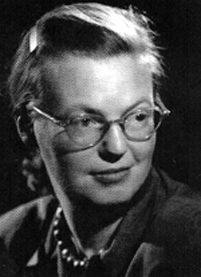
Shirley Jackson
Mary Katherine Blackwood (Merricat) is a bit of a wild child, she believes herself to have magical powers and, although she is around eighteen, she spends her spare time running and hiding in the woods and playing with her cat.  Her internal dialogues show great disdain for those around her whilst elevating herself into some kind of Supreme Being (“Bow all your heads to our adored Mary Katherine”).  She also has a strong hold over Constance who treats and humours her like a young child (“Silly Merricat”). 

The two sisters have a regular routine of housework, shopping and cooking, and this routine is very important to Merricat.  So, when a cousin drops in unexpectedly to stay for a while and threatens to upset their daily rituals (and Merricat’s hold on her sister) she takes extreme measures to get rid of him.

Whilst reading this novel I was thinking of the phrase ‘fat girls and feeders’ - Merricat isn't fat but Constance is definitely a feeder, and food is a major theme for the novel.  In fact, the ending is almost fairy-tale like with the villagers paying homage to the girls with food.  I really enjoyed reading this one.

The Haunting of Hill House is what I guess you would call a traditional haunted house story, and I found Eleanor the central character quite interesting and someone I could identify with (she’s a chronic daydreamer and so am I).  Eleanor has been invited to take part in a study of the supposed supernatural happenings at Hill House and was chosen due to her experience with poltergeist activity when she was younger.

I remember that the original movie really frightened me, however when reading the novel you are a good half way into it before things really start to happen but Jackson shows quite an art in stealthily unsettling your nerves.  My favourite scene has Eleanor clutching her friend Theodora’s hand whilst she sleeps.  It is pitch dark in the bedroom that they are sharing and there are babbling noises and shrieks coming from the adjoining room.  As things reach a climax Theodora sits up suddenly to see what is going on at which point Eleanor leaps out of bed asking in terror whose hand had she just been holding because it obviously hadn’t been Theodora’s – reading this just prior to going to sleep was a real goose-bump moment for me!  I didn’t enjoy this one as much as We Have Always Lived in the Castle, but it is still definitely worth reading, especially for the opening paragraph which you will find yourself reading several times over (the same paragraph also closes the novel).

  
The Lottery and Other Stories is a different sort of read again.  This selection of short stories are unusual to say the least and I must confess that some of them I just didn't ‘get’. The main problem I had with the collection was that most of the stories just didn't mean anything, or they didn’t have any sort of ending.  Many of the character’s are known by their title and surname only (ie Mr White, Mrs Straw) and I found this made it a little hard to read with the characters seemingly faceless and impersonal.

However there were a few gems to be found and aside from the title story I really liked Like Mother Used to Make which is about a middle aged man called David who has got his apartment just how he likes it – it is homely, the colours work well together, and everything has its place.  He is investing in silver tableware piece by piece and he is very proud of what he has bought to date. His neighbour however is slovenly, her apartment is a mess and not homely at all and this really disgusts him.  The story takes a nice twist when he is entertaining this neighbour one evening, showing off his culinary skills and silverware, when they are joined unexpectedly by a friend of the neighbour and David becomes the third wheel and a stranger in his own apartment.

The funniest story in this collection is My Life with R H Macy, and I actually laughed out loud at the ending. It was brilliantly done.

You do notice that order and obsession are the primary themes in Jackson’s writing.  Some people have made the comment that these stories are an extension of her neuroses, and she does seem to be quite an enigmatic character who had a few problems, but she is definitely a writer whose work I would like to explore more.

For further reading on Shirley Jackson visit: http://shirleyjackson.org/

Maxine 

Monday, June 24, 2013

Shantaram ~ Gregory David Roberts


Wow, Shantaram is one heck of a read. I've spent so much time with these characters that it will be hard to start a new novel.

There's so much to Shantaram, though how much is based on the author's actual experiences in Bombay is anyone's guess, but what I enjoyed most about this novel was the insight it gave me into the Indian culture such as friendship, love and the meaning of that curious Indian head wiggle. 

The story is told in the first person.  There is plenty of humour at the start of the novel but it does get darker and darker, until you wonder if there is going to be light at the end of the tunnel.  The characters range from slum dwellers to members of the Bombay Mafia, and I had to keep reminding myself that the mafia guys were criminals and violent men, yet it was so hard not to like them because we follow their developing friendships with the narrator Lin.

'Lin' is an Australian who has escaped from prison and who has arrived in Bombay on a fake New Zealand passport.  He is befriended by Prabhakar a young Indian tourist guide, and a truly wonderful character who totally enriches this novel.  Prabhakar takes Lin to his home village for six months as their friendship strengthens and finds Lin a hut in the slum where he lives in Bombay.  This hut eventually becomes the slum clinic thanks to Lin's knowledge of first aid, and the slum dwellers inability to obtain healthcare anywhere else.

Lin is eventually recruited into the Mafia and he finds himself prepared to risk his life just for the love of the mafia boss who he desperately wants to see as a father figure.  The father figure dreams are shattered towards the end of the novel and only the friendships that Lin has made over his years in Bombay will help to pull him through the hard times.

Despite its size, Shantaram is very easy to read, though I did find the constant metaphors and similes annoying and in places quite cringe worthy ("Our lips met like waves that crest and merge the whirl of storming seas."), and at times it did annoy me when 'Lin' gave the occasional sob story about his time spent in prison.  I felt like saying "so what, you committed the crime...." 

With this aside though Shantaram is a cracking read and it will probably rate up there with my favourites.


Maxine

Friday, June 14, 2013

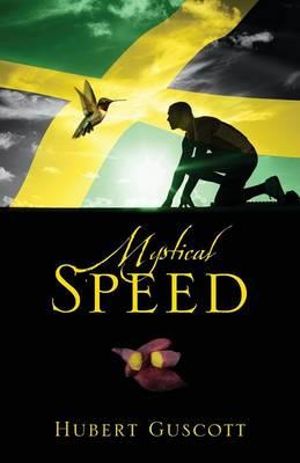
Mystical Speed ~ Hubert Guscott

Mystical Speed is a novella that I just don't know what to make of.  When it was pitched to me via the promoter it came across as a novel set in America and Jamaica that would be an inspiration to all athletes.  The story apparently  centred around young track athletes who travel to Jamaica to find out the secret to Jamaica's running success.  What they find there threatens their lives and changes them forever.  

Quite an interesting idea isn't it?  However, what I read was a very simplistic narrative that was better suited for a children's story and whilst I could see that it was an attempt at creating a fable, I didn't really like it.  

What this novella did do though was inspire me to read about Jamaican folklore and if you are planning on reading this book then it would pay to read up about 'rolling calfs' and 'Brother Anansi' otherwise you will have no idea what is going on.

Rolling Calf
Fulls marks for the cover though, it's one of the nicest book covers I've seen, and the layout presentation is also very good.  But, given the lack of descriptive writing, and the fact that it reads like a children's book, I think that some illustrations would help to enhance it.

This book does try to give you an insight into Jamaican culture, food and language but I found the whole thing just a little unusual - the way that it was written and the actual story - and unfortunately it just wasn't for me.

I've checked other sites for reviews and find that it has been receiving 5 stars, so I do wonder if I am missing something?


For more information about this book please visit: Mystical Speed

Until next time.....

Maxine

Wednesday, June 12, 2013

The Obsessive Chronicles ~ Josh Greenfield

Told in the first person, this story chronicles the journey of Jordan Fineman from a seemingly normal American Jewish teenager to a very troubled dis-functional young man.

Jordan's journey opens on a trip to Alaska where he finds seasonal work whilst taking a break from his studies, we then follow him back to New York where he experiences a mental breakdown and spends some time in a psychiatric hospital.

Jordan is bi-polar, and an obsessive compulsive, but he also has a  major problem with rage.  His rages create a drug like induced state where he can't think coherently.  Human to human contact is unbearable and, despite his obvious intelligence, he finds himself unable to hold down a job. Behind the scenes is a very supportive father - emotionally and financially - and a psychiatric doctor who he sees three times a week for many years.  Yet, despite this support, Jordan has great difficulty in trying to make sense of his place in the world, and to unscramble the messages that it sends to his brain.

I did find this story interesting, if not a little disjointed, and as an outsider to mental illness it gave me an insight into OCD and just how debilitating it can be. But, I think the author had difficulty in fully conveying the actual problems 'Jordan' was trying to work through - ie we are told about his rages but never really shown.  We have some examples of his OCD but it is never fully expanded upon.  We are told that these would not be explained in depth, but I think the reader needs this to be able to reconcile Jordan's subsequent behaviour patterns.

This is my second read in as many months on mental illness, and I did see some parallels in both  stories - for one thing, things get much worse before they get better especially when the sufferer's go off their medication.

I thought the opening of this novel was very well written, but as the story progressed the writing seemed to suffer. I think that there would be some benefit from further editing/proof reading as, for me, there were an unacceptable amount of spelling and grammatical errors.

In you are interested in more information about this novel please visit:


Maxine


Friday, June 7, 2013

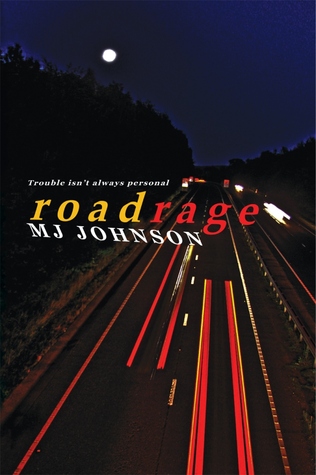
Roadrage ~ M J Johnson

After enjoying some very positive reviews for his first novel Niedermayer & Hart (my favourite ‘Indie’ read of last year) Martin has presented us with his psychological thriller Roadrage.

Forget the why’s and wherefore’s of the plot and just accept the fact that there are potentially some dangerously crazy people out there and, if they had hold of your personal information, how much damage could they do to your life?  One such person sets his sights on destroying the life of Gil Harper, an unassuming illustrator, who is learning to live again after the tragic death of his wife.  What starts out as a brief incident on the motorway one rainy Christmas night sends Gil’s life spiraling out of control.

There are some nice touches here and there; I liked the gear shift chapter headings, and dear old Spike…… what a lovely brave little character he is.  Some of the other characters I suspect are based on people Martin has known from his acting days (Sally, Gil’s love interest, is involved with the theatre).  I was suspicious of Sally from the start, and I was trying to work out how she would fit into the scheme of things, but you will need to read the novel to find out why she is so secretive.

This novel will get you thinking about the danger of being a creature of habit, and the security of your own personal information.  After all, we all live in the age of the internet where everything is accessed by passwords – and you can’t possibly remember them all, you have to write them down……….. somewhere……. don’t you?

For more info about Martin and his work visit: http://www.mj-johnson.com/


Maxine

Wednesday, May 1, 2013

Through The Withering Storm by Leif Gregersen


I was drawn to read this personal account of life dealing with mental illness, because I live with a man who is also diagnosed with bipolar disorder.

The brain is an amazing organ and the mind is a powerful thing, so to find yourself losing touch with reality and having compulsions that you cannot control must be very frightening indeed.

Whilst reading Through the Withering Storm I could see many similarities to stories that my partner has told me – excessive speeding around local streets in a flash car (motorbike in my partner’s case), excessive drinking and smoking, late nights and overworking, being academic but not putting the work in or, if doing the work, not doing assignments until the eleventh hour leaving no time to finish it. In fact my partner is doing this just now with a certificate in safety course he is involved in.  10pm on a Sunday night he brings out his assignment that is due in on Monday morning!

Whilst I laugh at my partner’s stories about his past ‘antics’, reading them as written by Leif has sobered me up somewhat.  The behaviour pattern is weird, off kilter and sometimes frightening, and it is definitely not funny.  The fact that Leif was unable to get the help he so desperately needed at such a difficult age, and the lack of effective parental support, is heartbreaking.

After reading the book I spoke to my partner about it, and was a bit worried that he may be annoyed that I had read it, or he may see it as me picking on him, but instead he was very interested and even opened up a little more about his own battles with his parents, his drinking (he has been sober since I have known him), run ins with the local authorities and the medical staff where he was briefly institutionalised.

I think, therefore, that this book is a brave effort at showing those who do not suffer from mental illness that beneath the bizarre behaviour a human being is desperate for help.  They want to live a stable life, hold down a job and be loved.  But, this book can also be read by those that are suffering so they can see that they are not alone, that there is light at the end of the tunnel, and that if they have been prescribed medication - KEEP ON TAKING IT!

I’d like to think that with current awareness of mental health issues treatment is not too far away once the illness has been recognised, and that patients are dealt with a bit more sympathetically than they were in the 60’s, 70’s and 80’s.

I think Leif has done a good job in setting things down, although I feel a lot was also left unsaid.  I won’t go into language and grammar, as this is not what this book is about.  It is a personal account, end of story.  Sometimes Leif’s illness does creep into the writing which serves to illustrate that although he has taken charge of it, he will never be free from it.

I wish Leif all the best for his future, and good luck with this book.

Maxine

PS I forgot to mention that this book is also very heart warming in places.  The kindnesses that Leif was shown by total strangers brought tears to my eyes.