Showing posts with label Shirley Jackson. Show all posts

Saturday, December 14, 2013

2013 ~ My Literary Year That Was

At the end of each year I love going back and having a look at what books I enjoyed and what I did not.  So, without further ado - what I enjoyed:

Philip Roth
Phillip Roth was a new author for me this year, and I found that I was very comfortable with his writing style.  I read several of his novels, but hands down my favourite was The Plot Against AmericaNarrated by a young Philip Roth, I completely identified with this nerdy little boy and his beloved stamp collection (yes, a little known fact about me is my love of stamps and my stamp collection!).  The novel is an alternate history which is seen through young Philip’s eyes as he tries to make sense of the affect of the isolationist Charles Lindburgh’s presidency on his local Jewish community and immediate family prior to America entering World War II.  I loved it.

Mason & Dixon by Thomas Pynchon

I haven’t finished this one yet, but I’m ¾ of the way through it and it deserves a mention here.  I read somewhere that the best way to read a Pynchon novel is just to read the words and if some of it makes sense or connects in some way then good-ho, but if it doesn't just keep reading and try to enjoy his use of language.

 I totally disagree. 
This is my first Pynchon novel, but the best way for me to enjoy Mason & Dixon has been to read it in conjunction with essays and notes on the novel.  Pynchon just gives you so much in a few words; one sentence can hold a plethora of meaning, historical fact, science, humour and innuendo.  After reading just the first chapter I realised that there was something very special about the writing and I didn't intend missing a trick.  I only read three pages a night and then I read through associated notes so that I completely understand what I have read and can research some of the historical and scientific references.
This novel is also an alternate history, as related by the Rev. Wicks Cherrycoke who claims he 'was there'.  With a bit of embellishment for the sake of the children listening to the story we follow the friendship of Mason and Dixon as they complete the famous Mason-Dixon line in America.  There are a few adventures thrown in, and a hilarious segment about a chef and a love sick mechanical duck.  I have never read anything like this before, it’s been a total challenge.
The Rime of the Ancient Mariner by Samuel Taylor Coleridge
This was the year that I discovered this awesome poem. I don't really like poetry, although my favourite childhood book was A Child's Garden of Verses by Robert Louis Stevenson, but Coleridge has a gothic bent which really appeals to my tastes.  When I read The Rime of the Ancient Mariner it totally blew me away, and I have read it and listened to it many times since.
New Authors

Each year I always try to find new authors to read.  I did try several new ones this year but the stand outs for me were William Faulkner (I read The Sound and The Fury) and Philip Roth.  On the 1001 Books You Must Read Before You Die listing that I follow Don DeLillo has more books on it than that of any other author so I tried Falling Man (not on the list) and The Body Artist.  Unfortunately I found both of these novels profoundly boring, and the writing style reeked of self indulgence, so I'm very wary of trying another.

The Classic

Cervantes
My 'classic' this year was Don Quixote by Miguel de Cervantes.  After two or three false starts I finally got into this very funny novel and I marveled at how well the humour still worked today, although I did find the second part of the novel much easier to read than the first part.  Sancho was funnier and more endearing in the second part, and I loved his multitude of proverbs.  There were a couple of very good short stories within the novel (as well as some short stories that totally detracted from it!), one of which was the excellent The Impertinent Curiosity about two friends, Anselmo and Lothario, and an 'indecent proposal'.
 
What I Didn't Enjoy

Apart from Don Delillo, I also struggled with The Wide Sargasso Sea by Jean Rhys, The Fourth Bear by Jasper Fforde and The Invisible Man by H G Wells.  Out of over 67 books read for the year that’s not a bad failure rate.  With all these novels it was the characterisations which let them down.  Jean Rhys dared to use characters from Jane Eyre and I could not correlate the two stories at all, Jasper Fforde’s characters were just plain silly compared to his other wacky novels, and the character of The Invisible Man was a nasty piece of work through and through and I didn't enjoy reading about him.  Another set of characters I didn't enjoy reading about were those scottish drug addicts in Trainspotting.


But, I'm sorry to say (because my love of Stephen King goes way back), my most disappointing read for 2013 was Dr Sleep.  This novel was highly anticipated, especially on the back of the brilliant 11/22/63, but I have to say it – it was abysmal.  The writing style was amateur, the story just plain silly, and using Dan Torrance from the The Shining has now marred this novel for me.  If I mention that I will be shelving my copy between The Regulators (written under Richard Bachman) and Rose Madder, you will 'get' how bad I found it.

The Horror

My reading year would not be complete without a horror or two thrown in, but I'm finding it harder and harder to find a new horror to read, or should I rephrase that to 'a readable horror'.

I started the year with The Amityville Horror by Jay Anson but it's such a well known, and well worn, story that I didn't get the thrill I was looking for from it.  My next attempt was Harbour by John Ajvide Lindqvist, but I just didn't 'get it' and it wasn't scary at all. THEN, I picked up a small factual book called Zombies: A Field Guide to The Walking Dead by Dr Bob Curran and a couple of articles in it did unsettle me in the way I was looking for.  I also really enjoyed an old classic The House on the Borderland by William Hope Hodgson which was years ahead of it's time and which completely thrilled me. Cypher the cult classic by Kathe Koja wasn't too bad, but I didn't connect with any of the characters and I also finally got round to reading some once elusive Shirley Jackson novels, and mostly she did not disappoint.


So, with 2013 winding down, I'm now full of anticipation to my reading year ahead.  I hope it's a good one!


Maxine

Tuesday, July 9, 2013

My Shirley Jackson Discovery

There are some writers who you read about, and whose work is recommended over and over again, yet when you look for their books they are either unavailable or hellishly expensive.  Robert Aickman is one author who comes to mind in this regard (though thankfully his work is slowly being reprinted) and the other is Shirley Jackson. I've been trying to get a copy of her novels for quite some time and was really pleased to see a couple of titles finally arrive at my library last month and, on checking out Fishpond, I was able to pick up a few at a reasonable price.

My first read was We Have Always Lived in the Castle and I thought this was a delightful tongue in cheek study of madness and control. The story centres on the Blackwood sisters who live in their family mansion on the outskirts of a small village.  It is well known that the entire Blackwood family were poisoned during a family dinner, with Constance Blackwood being arrested for their murder.  Constance was released though, without charge, and she returned home to take care of her younger sister Merricat and their infirm Uncle Julian.

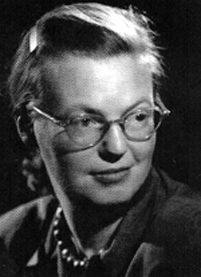
Shirley Jackson
Mary Katherine Blackwood (Merricat) is a bit of a wild child, she believes herself to have magical powers and, although she is around eighteen, she spends her spare time running and hiding in the woods and playing with her cat.  Her internal dialogues show great disdain for those around her whilst elevating herself into some kind of Supreme Being (“Bow all your heads to our adored Mary Katherine”).  She also has a strong hold over Constance who treats and humours her like a young child (“Silly Merricat”). 

The two sisters have a regular routine of housework, shopping and cooking, and this routine is very important to Merricat.  So, when a cousin drops in unexpectedly to stay for a while and threatens to upset their daily rituals (and Merricat’s hold on her sister) she takes extreme measures to get rid of him.

Whilst reading this novel I was thinking of the phrase ‘fat girls and feeders’ - Merricat isn't fat but Constance is definitely a feeder, and food is a major theme for the novel.  In fact, the ending is almost fairy-tale like with the villagers paying homage to the girls with food.  I really enjoyed reading this one.

The Haunting of Hill House is what I guess you would call a traditional haunted house story, and I found Eleanor the central character quite interesting and someone I could identify with (she’s a chronic daydreamer and so am I).  Eleanor has been invited to take part in a study of the supposed supernatural happenings at Hill House and was chosen due to her experience with poltergeist activity when she was younger.

I remember that the original movie really frightened me, however when reading the novel you are a good half way into it before things really start to happen but Jackson shows quite an art in stealthily unsettling your nerves.  My favourite scene has Eleanor clutching her friend Theodora’s hand whilst she sleeps.  It is pitch dark in the bedroom that they are sharing and there are babbling noises and shrieks coming from the adjoining room.  As things reach a climax Theodora sits up suddenly to see what is going on at which point Eleanor leaps out of bed asking in terror whose hand had she just been holding because it obviously hadn’t been Theodora’s – reading this just prior to going to sleep was a real goose-bump moment for me!  I didn’t enjoy this one as much as We Have Always Lived in the Castle, but it is still definitely worth reading, especially for the opening paragraph which you will find yourself reading several times over (the same paragraph also closes the novel).

  
The Lottery and Other Stories is a different sort of read again.  This selection of short stories are unusual to say the least and I must confess that some of them I just didn't ‘get’. The main problem I had with the collection was that most of the stories just didn't mean anything, or they didn’t have any sort of ending.  Many of the character’s are known by their title and surname only (ie Mr White, Mrs Straw) and I found this made it a little hard to read with the characters seemingly faceless and impersonal.

However there were a few gems to be found and aside from the title story I really liked Like Mother Used to Make which is about a middle aged man called David who has got his apartment just how he likes it – it is homely, the colours work well together, and everything has its place.  He is investing in silver tableware piece by piece and he is very proud of what he has bought to date. His neighbour however is slovenly, her apartment is a mess and not homely at all and this really disgusts him.  The story takes a nice twist when he is entertaining this neighbour one evening, showing off his culinary skills and silverware, when they are joined unexpectedly by a friend of the neighbour and David becomes the third wheel and a stranger in his own apartment.

The funniest story in this collection is My Life with R H Macy, and I actually laughed out loud at the ending. It was brilliantly done.

You do notice that order and obsession are the primary themes in Jackson’s writing.  Some people have made the comment that these stories are an extension of her neuroses, and she does seem to be quite an enigmatic character who had a few problems, but she is definitely a writer whose work I would like to explore more.

For further reading on Shirley Jackson visit: http://shirleyjackson.org/

Maxine